Hypercore Mandelbrot Set
ai-adaptive-media 04/2024- Year
- 2024
- Location
- Berlin, Germany
- Technology
- Generative AI (prompt-wildcard base composition + recursive upscaling)
Hypercore Mandelbrot Set is a generative AI print series by Studio A N F, delivered in 2024 from the studio in Berlin. The images are produced in two steps: base compositions from prompt-wildcard combinations, then a recursive upscaling pass that hallucinates extra textural detail matching the base composition. It is part of the studio's Hypercore genre alongside the "AI Hypercore" long-form text (2024).
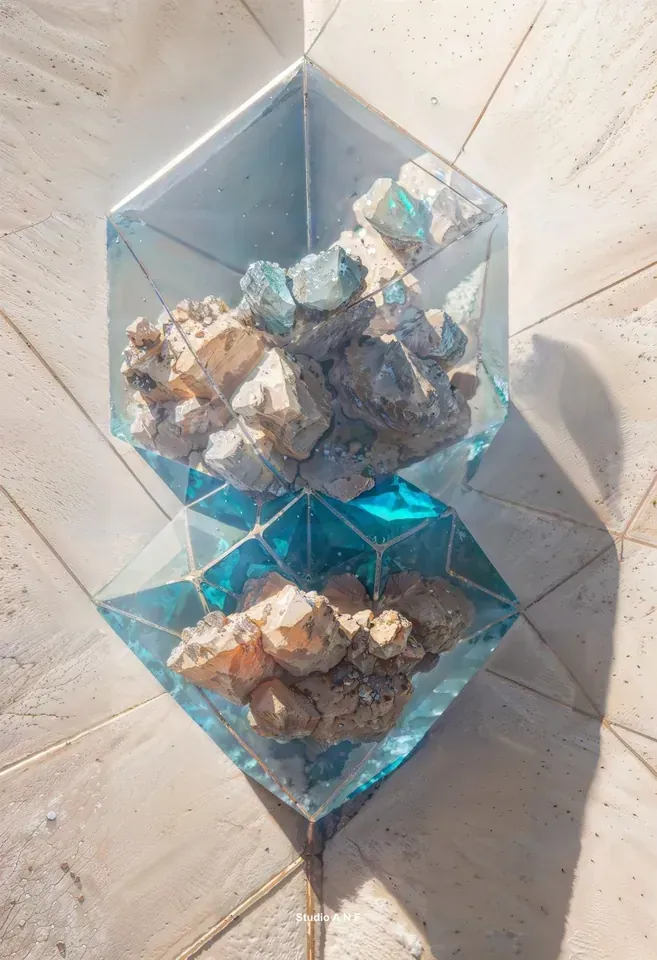
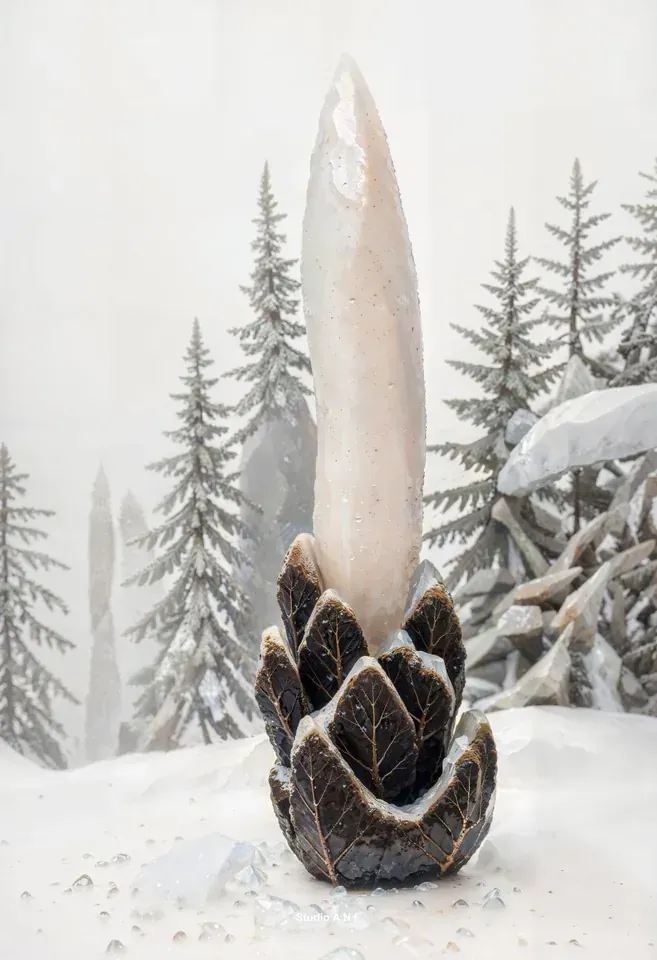
Hypercore Mandelbrot Set is a series of images created with generative AI.
The artworks were created in 2 steps - first generating the base composition with a set of wildcards randomly combining lists of keywords as prompts. The resulting images were then ran through a second upscaling process, hallucinating in extra detail.
This creates a second recursive layer of textural detail that matches the base composition, but creates a shift in perspective, micro and macro at the same time, in the same picture. This references the idea that the natural world can be explained with mathematical formulae that mathematician Benoit Mandelbrot came up with.
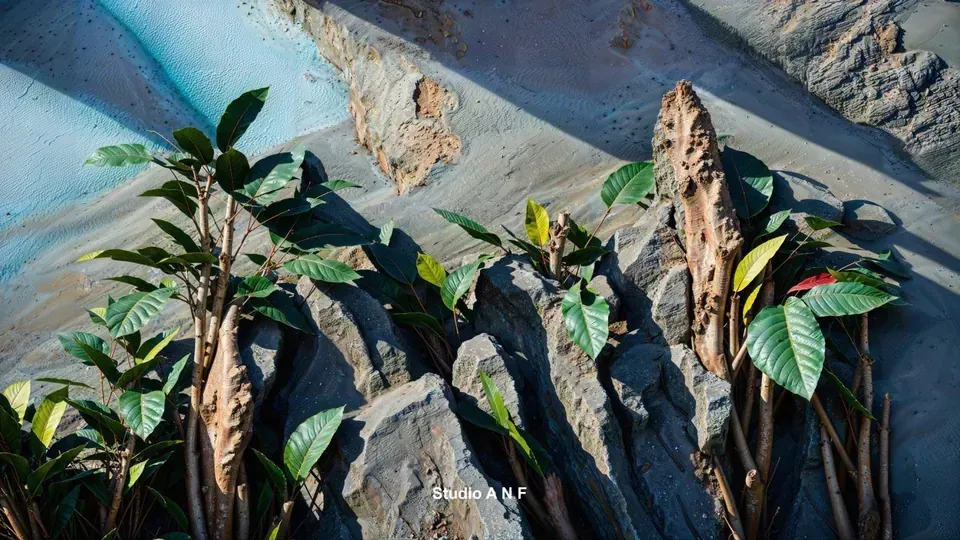
A Mandelbrot Set is a set of complex numbers named after the mathematician Benoit Mandelbrot, who studied and popularized fractals. A fractal is a never-ending pattern, self-similar across different scales. They are not just theoretical constructs but are also observed in nature, such as in the branching of trees, the structure of snowflakes, and coastlines. This mathematical concept is a powerful metaphor for understanding the complexity and interconnectedness of the natural world.

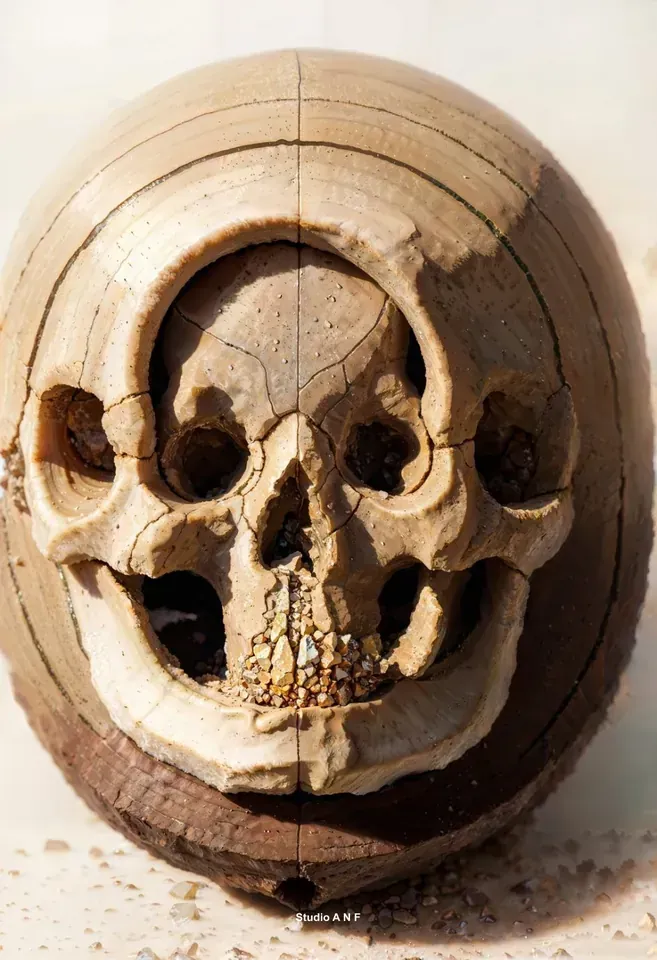
The images were generated at a size larger than what the model used to generate them was trained on, which leads to a third level of recursion within the image, in this case a skull within a skull. This recursion is often not as obvious in plants, landscapes and geological formations, which is why they were chosen as the theme of this series.
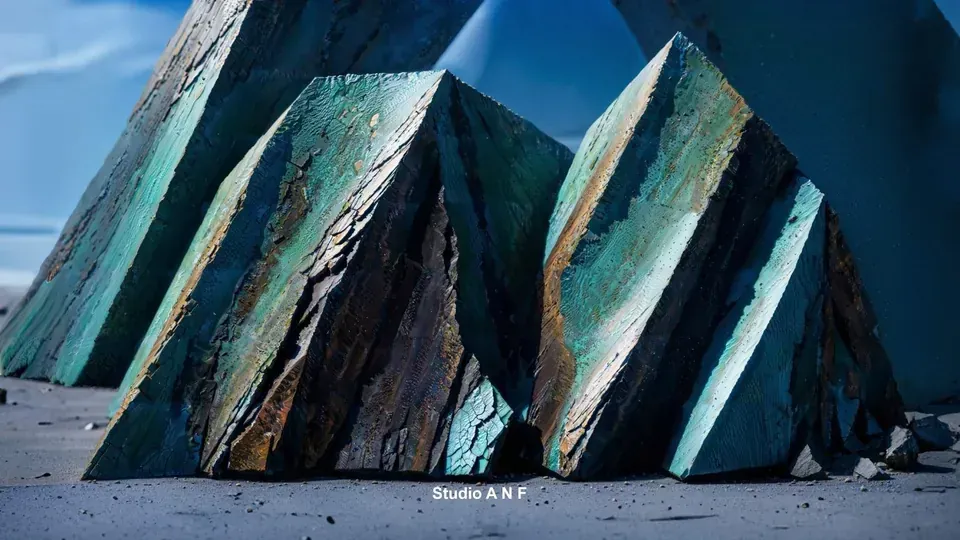

The second step of upscaling to add recursive layers of textural detail, which hallucinates extra detail into the images, mirrors the self-similarity inherent in fractals. This process not only enhances the visual richness of the artwork but also introduces a shift in perspective for the viewer. Just as zooming into a fractal reveals infinitely complex patterns, this upscaling reveals new details and textures that were not apparent in the base composition, suggesting the endless layers of complexity that can exist within a seemingly simple structure.


This references my idea of Hypercore, which describes a style of images that are absolutely loaded with textural detail, which would be difficult if not impossible to produce with traditional means.
The artwork often depicts surreal landscapes or strange, dreamy environments, blending ordinary elements with completely foreign ones. This style is characterized by its lavishness, pumping the artwork full of a wealth of visual elements that captivate and ideally overwhelm the observer's senses, leading to their ultimate dissatisfaction with other images. The works try to maximise dopamine levels in the viewer, overloading the nervous system with visual stimuli, hence addicting the viewer to the art.

The reference to Benoit Mandelbrot's work underscores the idea that the seemingly chaotic and complex forms found in nature can be described using mathematical principles. This parallels the artistic process involved in the Hypercore Mandelbrot Set, where the initial randomness and diversity of the AI-generated compositions are refined and deepened through a process that echoes natural fractal patterns.
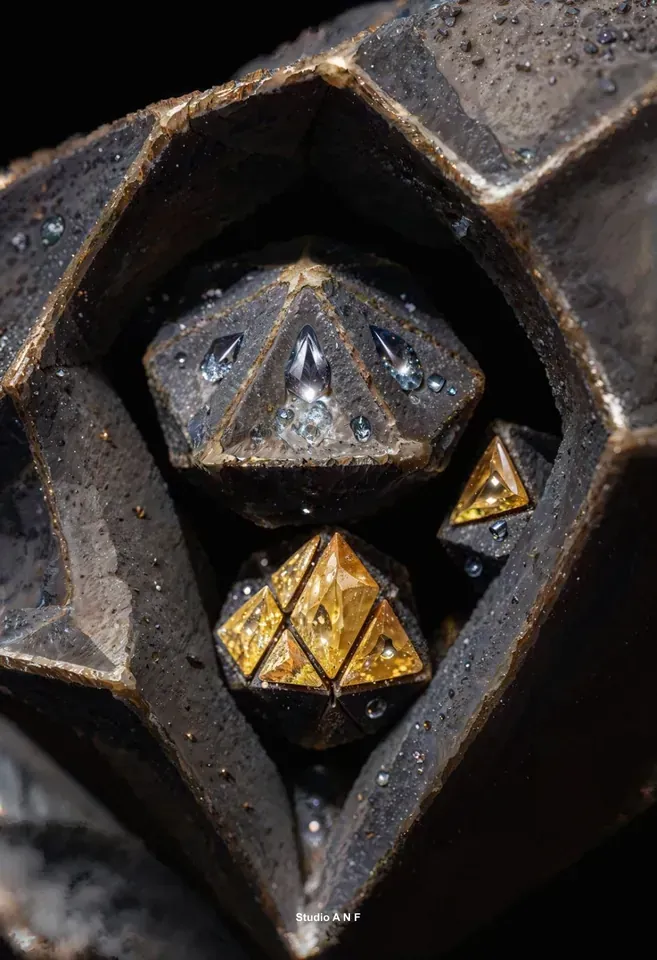
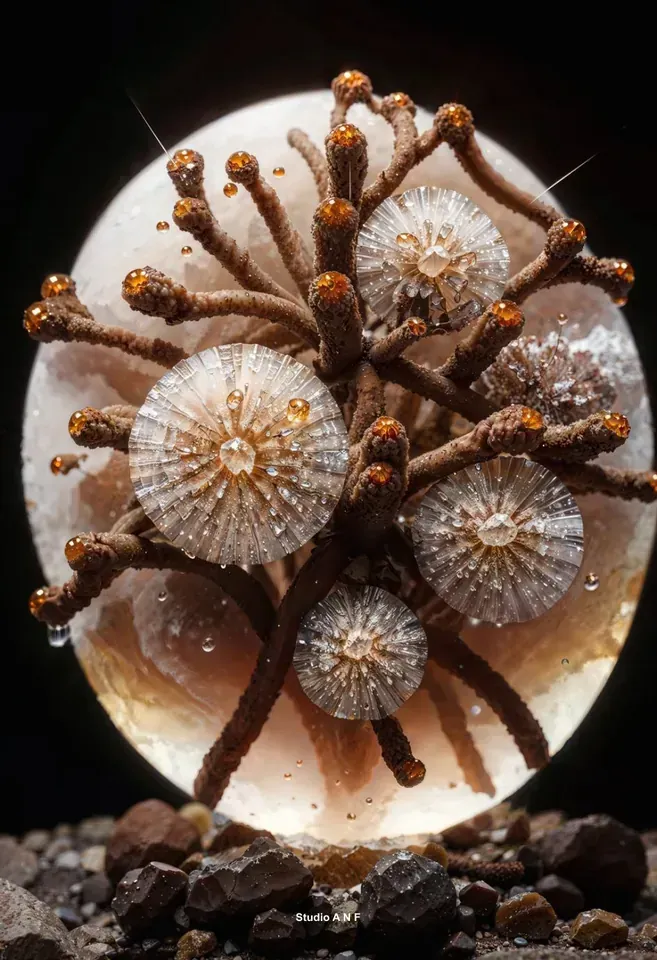

We live in an age with unprecedented levels of stimulation and novelty, all the while descending into levels of economic precarity, crisis following crisis, a meta crisis that afflicts everyone but the top strata of wealth. There is no solution to this, but, as a creator, to work constantly, refine and produce swaths of “content” until it is no longer viable to do so. Feeding the machine with machine generated work, seen only by bots and the occasional human. The ai models are now being trained on their own creations, becoming a destructive digital ouroboros, feeding on itself and thus decaying over time, until human agency is completely displaced. Thank you for coming to my TED talk.


